
Permanent magnet machines for marine applications
The Switch permanent magnet machines provide maximum flexibility by operating seamlessly as both generators and propulsion motors. Engineered specifically for diverse vessel types, they enable efficient and reliable power transmission while minimizing mechanical complexity.
Additionally, we extensively test all permanent magnet machines at our Large Drive Test Center to verify performance under operating conditions. As a result, they align with international standards and classification requirements, providing shipowners trusted, future-ready propulsion motors and shaft generators.
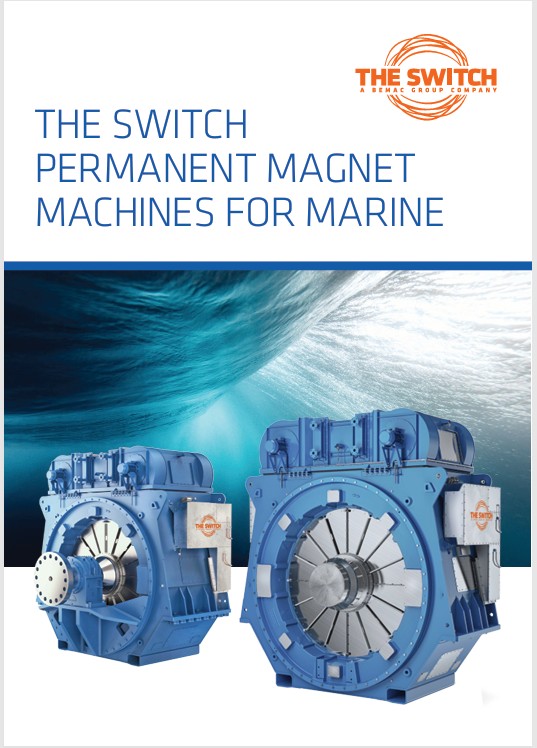
Brochure: The Switch permanent magnet machines for marine
Widest range of permanent magnet machines available
PMM2000M
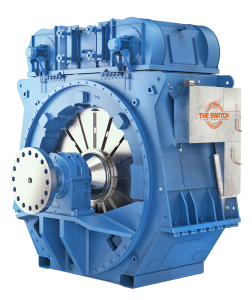
PMM1500M
- Torque: 220 – 630 kNm
- Rotating speed: 0–220 rpm
- Application: Typically used in 2–4 MW direct-drive systems
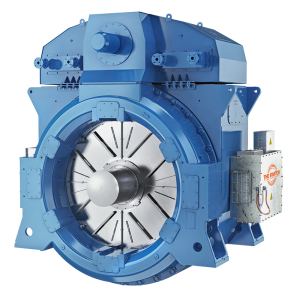
PMM1200M
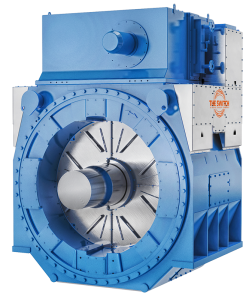
PMM1000M
- Torque: 73 – 230 kNm
- Rotating speed: 0–250 rpm
- Application: Typically used in 1–2 MW direct-drive systems
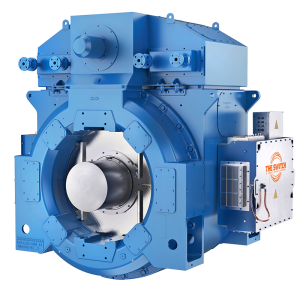
PMM850M
- Torque: 70 – 230 kNm
- Rotating speed: 0–400 rpm
- Application: Typically used in 0.5–2 MW shaft generator and propulsion motor applications
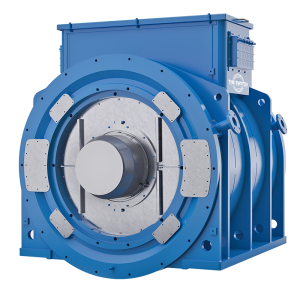
Unsure what machine suits your vessel best?
Advantages of permanent magnet machines
Permanent magnet (PM) technology is key to higher efficiency in shaft generator and direct propulsion applications.
The design requires a strong magnetic field to link the stator and rotor for electromechanical power conversion. Traditionally, a separate winding supplied the field with electric current.
Modern Neodymium magnets create the magnetic field more simply and efficiently, yielding a technically advanced machine. That’s why their use in PM machines have made them the top choice for wind power – and now also for marine.
| Higher efficiency | No power is consumed to create the magnetic field, reducing losses and improving overall efficiency. Rotor losses close to zero |
| Better reliability and less maintenance | No rotor windings, slip rings, exciters or automatic voltage regulators |
| Reduced space requirements | Higher air gap tangential stress results in more compact machine Shorter and narrower, especially in low-speed applications |
| Enhanced shaft line dynamics | Much smaller rotating mass and inertia Reduced torsional vibrations, lateral vibrations and rotor deflections |