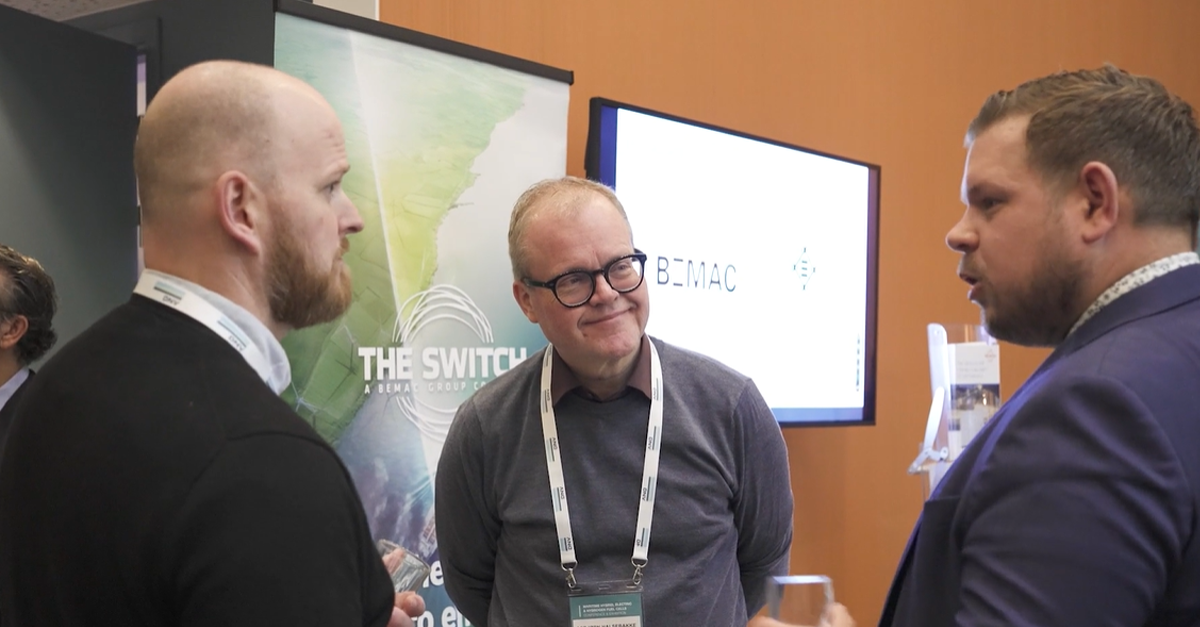
From October 21–23, The Switch returned to Bergen, Norway, for the Maritime Hybrid, Electric & Hydrogen Fuel Cells Conference 2026. The event is one of the industry’s key meeting places for shipowners, shipyards, naval architects, equipment suppliers, classification societies and other maritime stakeholders.
The three-day event proved highly valuable, offering excellent opportunities to connect with people from across the entire vessel value chain.
As part of the conference program, Asbjørn Halsebakke, Chief Expert Marine Concepts at The Switch, presented the benefits of shifting to DC power systems. The presentation generated significant audience engagement and follow-up discussions. Attendees showed particular interest in the company’s DC protection concept, with many continuing the conversations after the session. Part of the appeal was the practical case studies, underlining the value of sharing tangible, real-world results.
Another topic actively discussed throughout the conference was shaft generator retrofits. Many attendees were keen to learn how existing vessels could improve efficiency and performance through electrical system upgrades.
The conference also highlighted evolving trends in maritime decarbonization. While general interest in fuel cells appears to have eased compared with previous years, activity around solid oxide fuel cell (SOFC) projects is growing. Nuclear propulsion emerged as a topic too, reflecting a broader shift in how the industry discusses future energy solutions for shipping.
Alongside strengthening relationships with existing contacts, The Switch established several promising new connections, including with battery technology companies, classification societies and shipbuilding representatives.
“For us, the Bergen conference remains one of the strongest events for meeting decision-makers from across the industry. This year, it also confirmed something very important: The Switch continues to be recognized as a leading provider of protection technology for DC distribution systems, and there is a clear market interest in solutions supporting the industry’s ongoing electrification,” says Halsebakke.