Reliable power, even under pressure

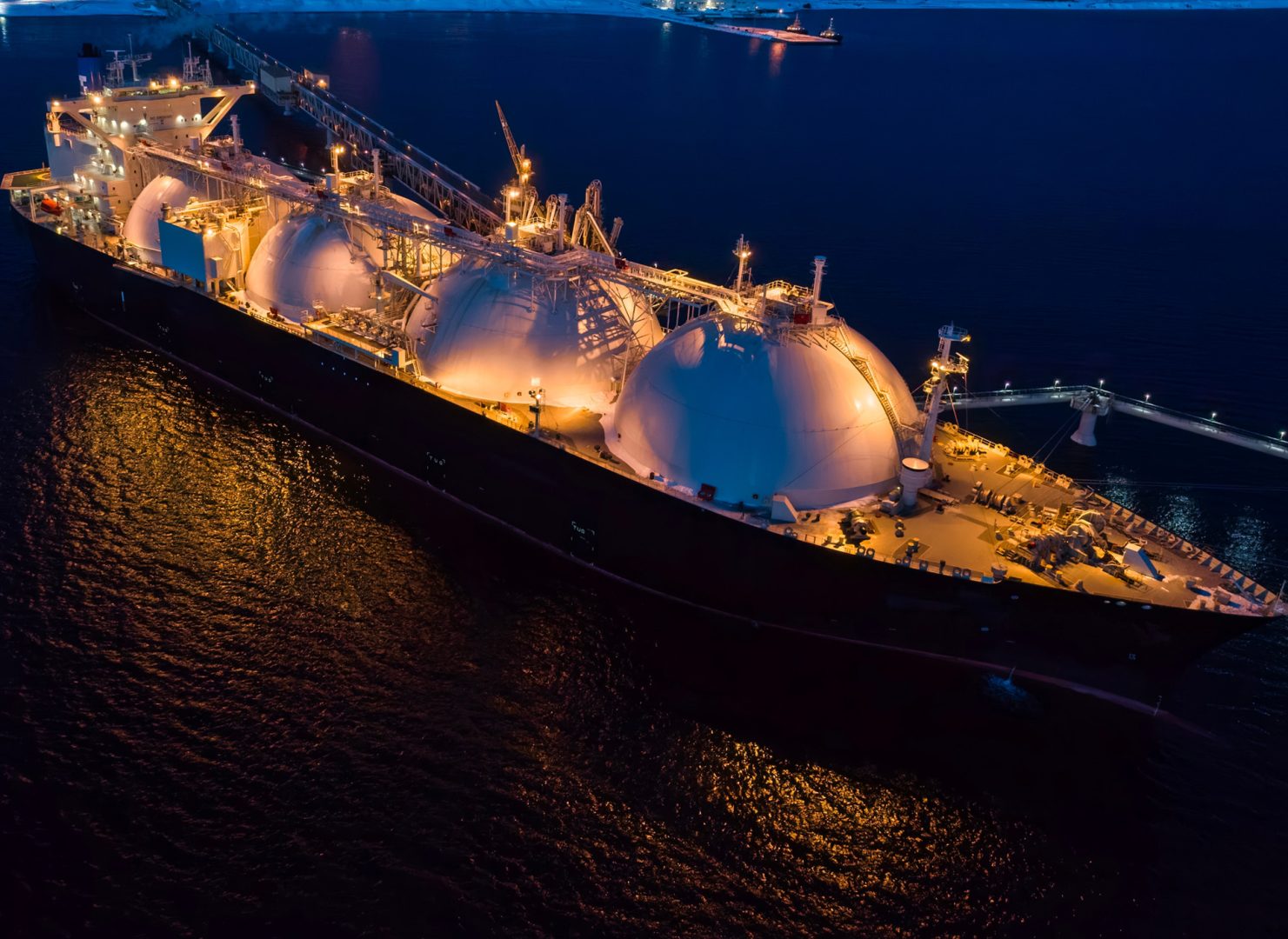
LNG and LPG carriers run some of the heaviest continuous electrical loads at sea, with reliquefaction plants and cargo compressors drawing multiple megawatts around the clock to keep cargo tanks at pressure and temperature. This demand can’t be interrupted. At the same time, tightening EEXI and CII requirements are reshaping the segment. Therefore, reliable and efficient power generation with shaft generators or electric propulsion is critical – both to reduce emissions and fuel consumption and to keep cargo operations running safely.

The Switch’s shaft generators produce onboard power directly from the main engine, reducing the need for dedicated auxiliary gensets. This is particularly valuable for dual-fuel vessels. Their main engines can use boil-off gas for propulsion, while shaft generation makes efficient use of the available engine power. With proven power supporting demanding cargo systems, The Switch helps gas carriers save fuel and strengthen their compliance profile. It’s technology built for a segment where power can never be allowed to drop.

icon-05-orange

A typical gas carrier installation can save around 700 tons of fuel, 2,000 tons of CO₂ and roughly USD 500,000 per year compared to a genset. 
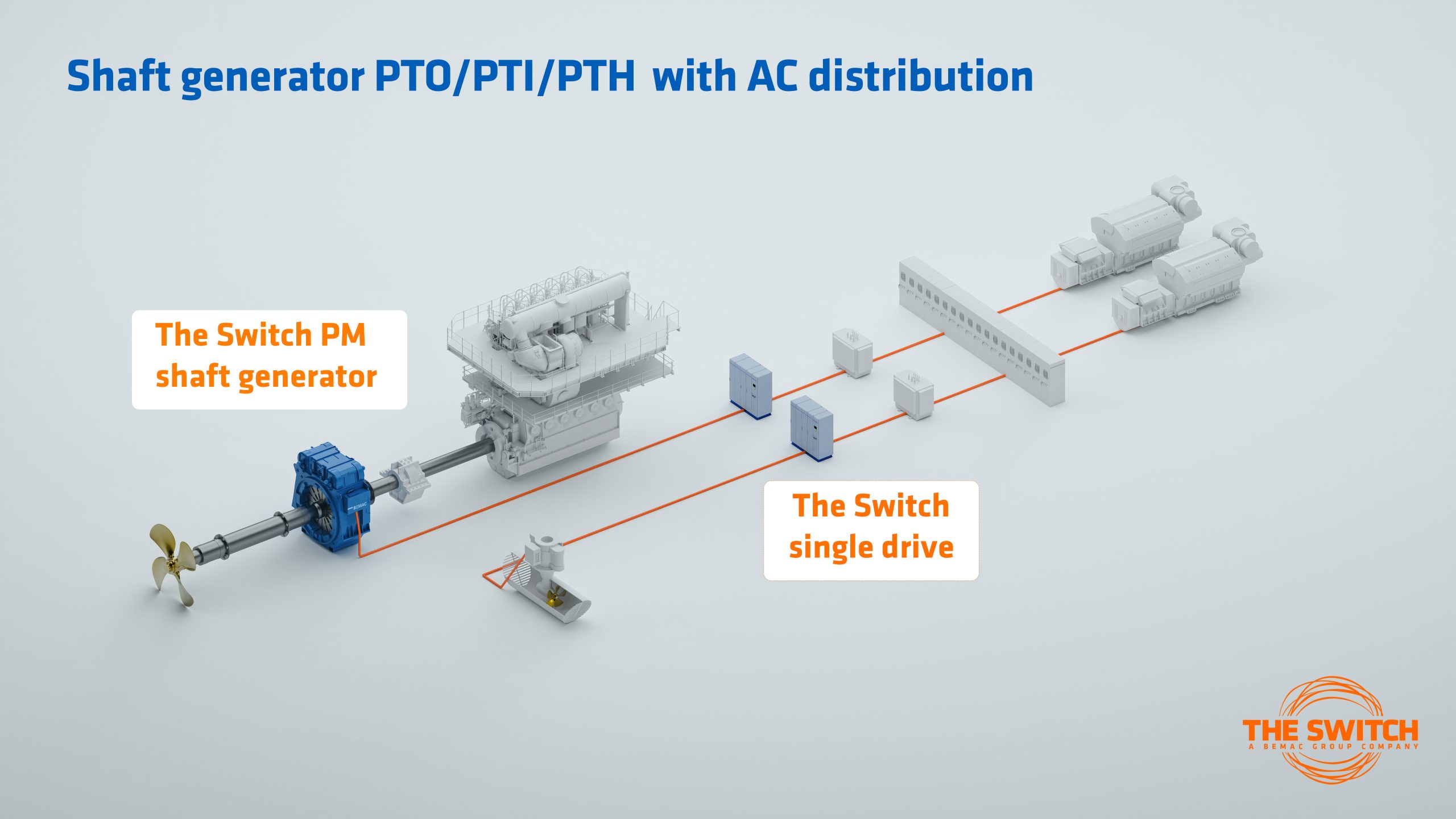
Marine solution concepts

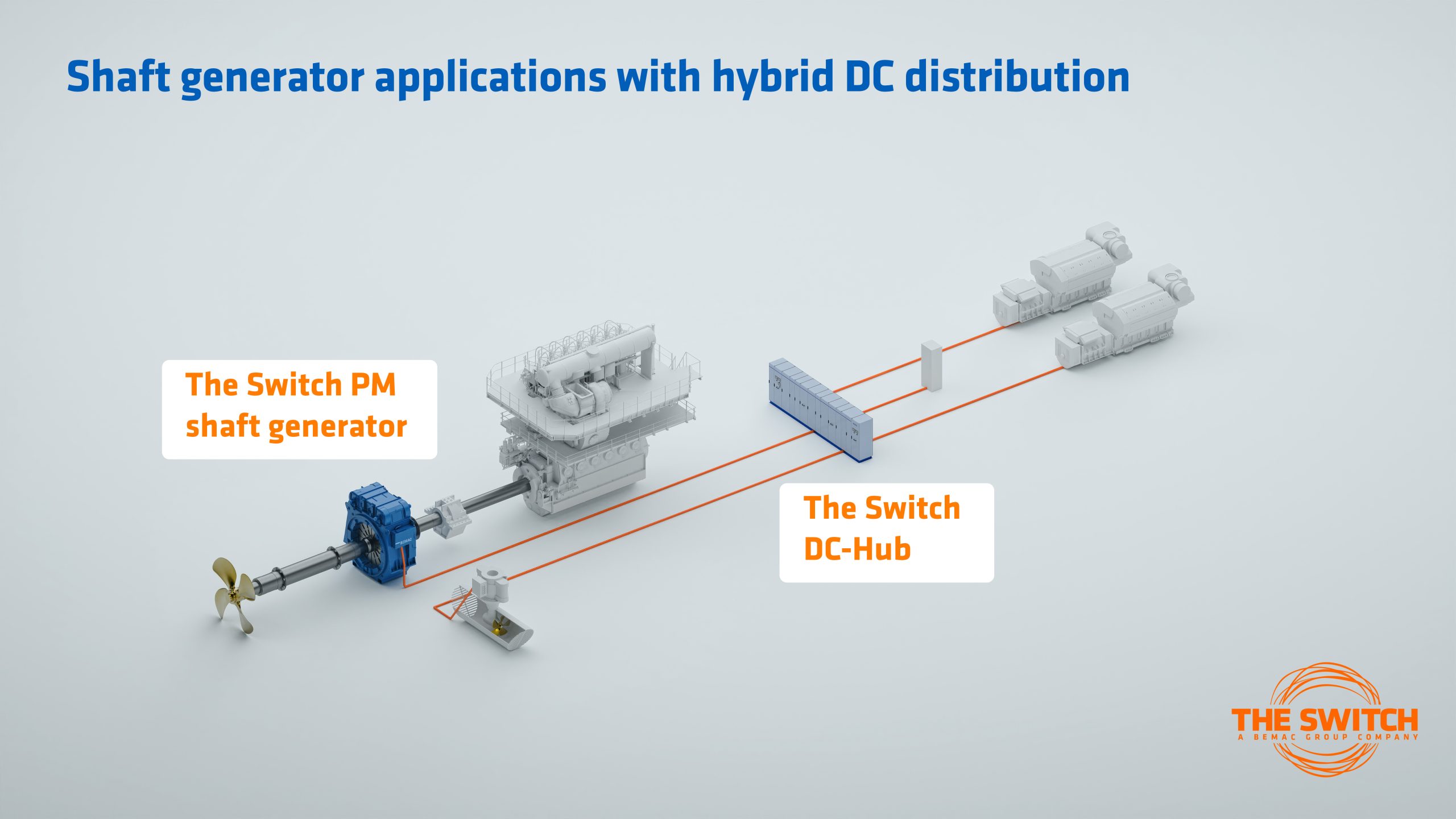
  • Isometric diagram of a shaft generator system labeled 'The Switch PM shaft generator' with orange cables connecting modules across a light-blue background.
  • Infographic showing shaft generator system with hybrid DC distribution and labeled components: The Switch PM shaft generator and The Switch DC-Hub on a rail/ship/industrial setup.
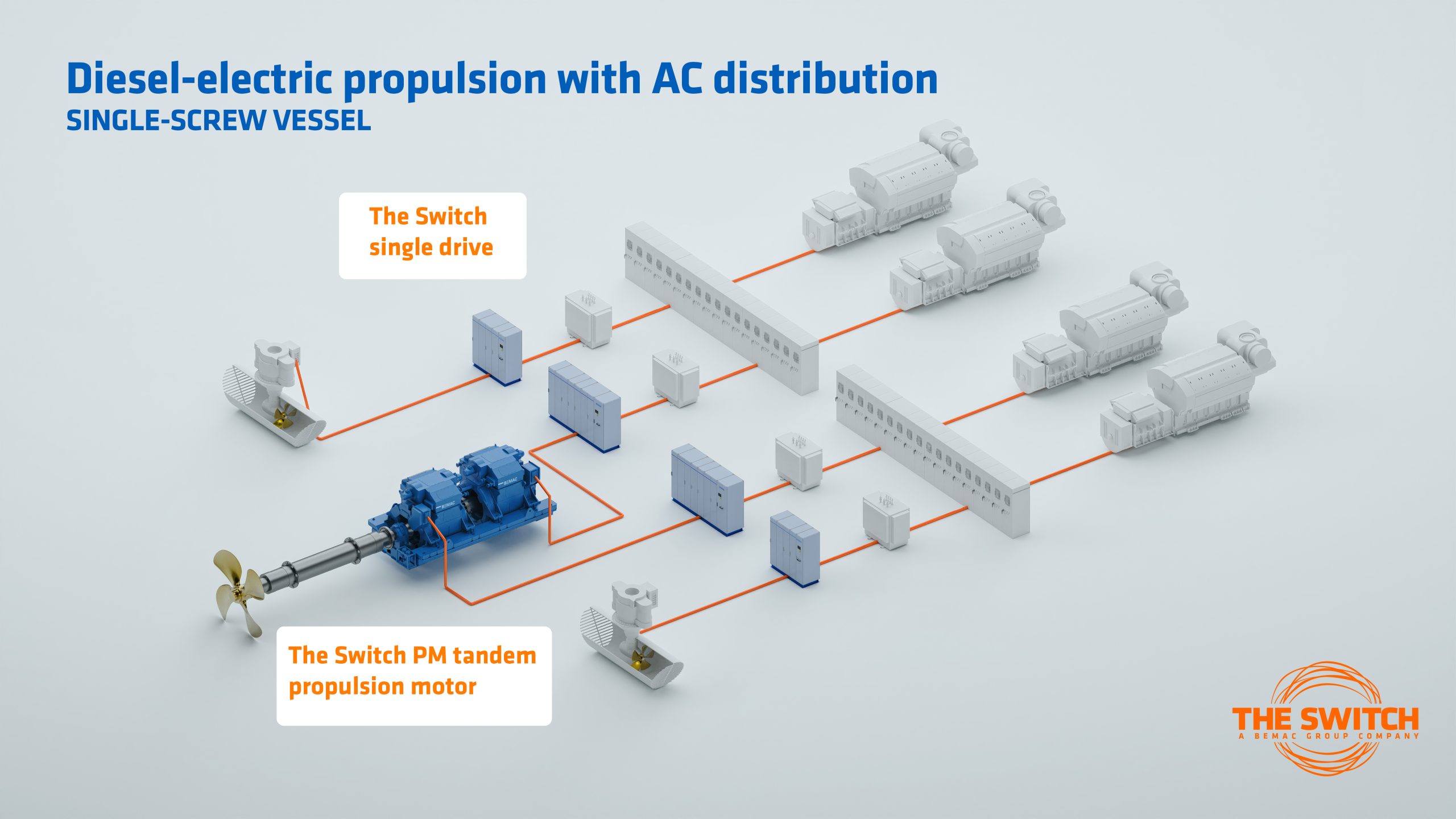
  • 3D diagram of a diesel-electric propulsion system for a single-screw vessel, with orange cables and equipment labeled The Switch
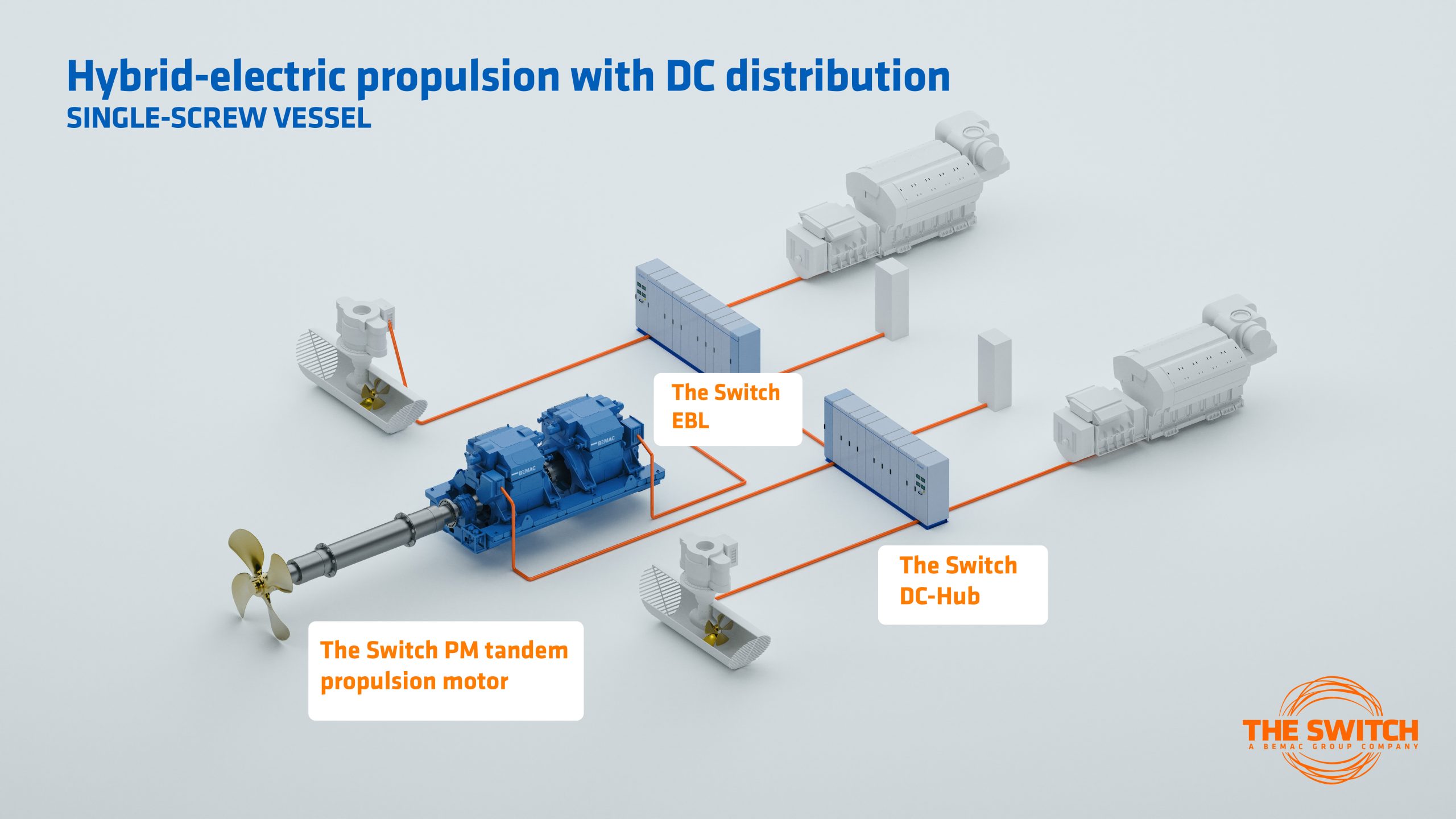
  • Infographic of a hybrid-electric propulsion network for a single-screw vessel, showing DC distribution lines and labeled components like The Switch EBL and DC-Hub.
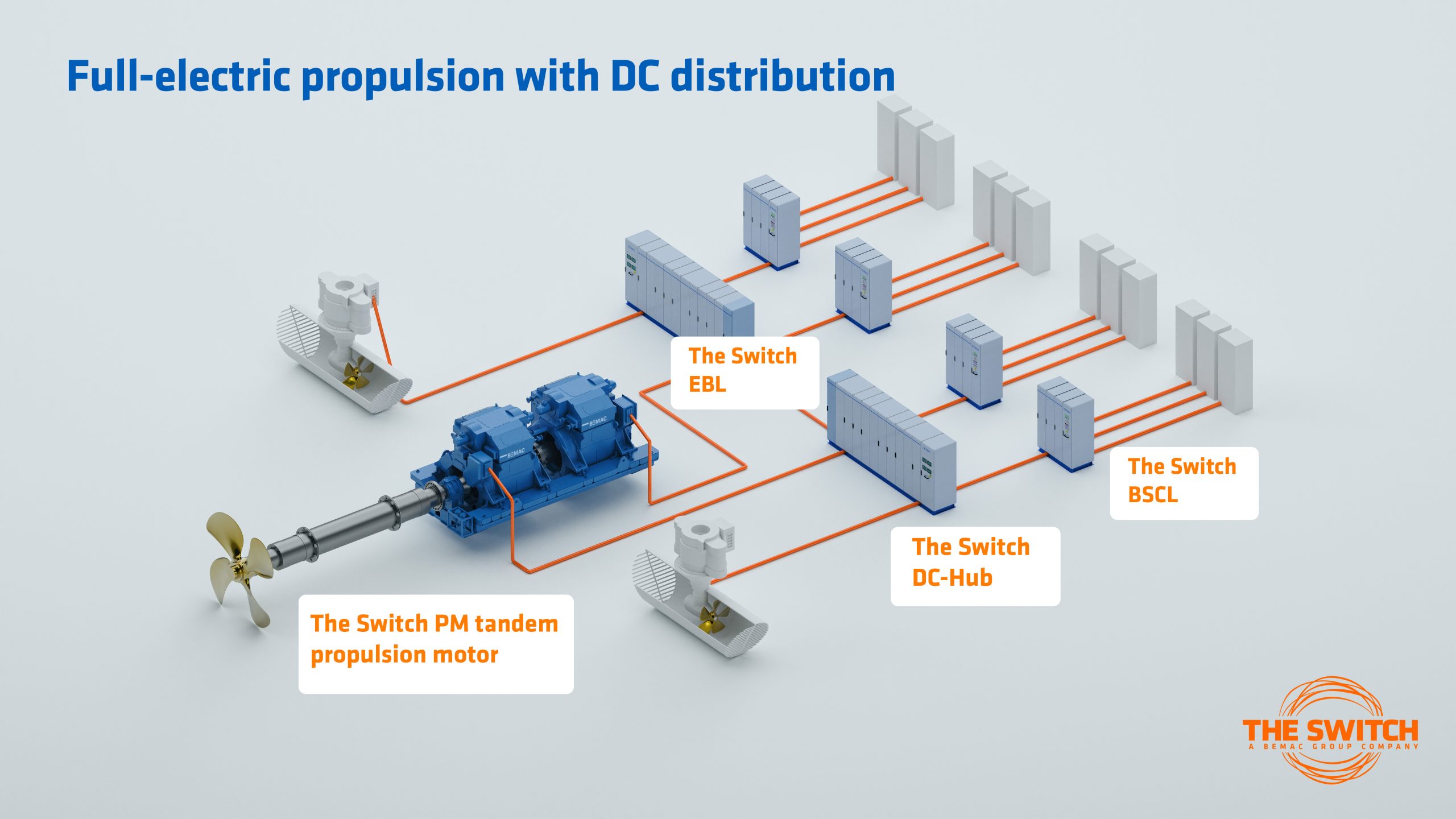
  • Isometric view of a ship’s full-electric propulsion system with DC distribution panels connected by orange cables to a propulsion motor.
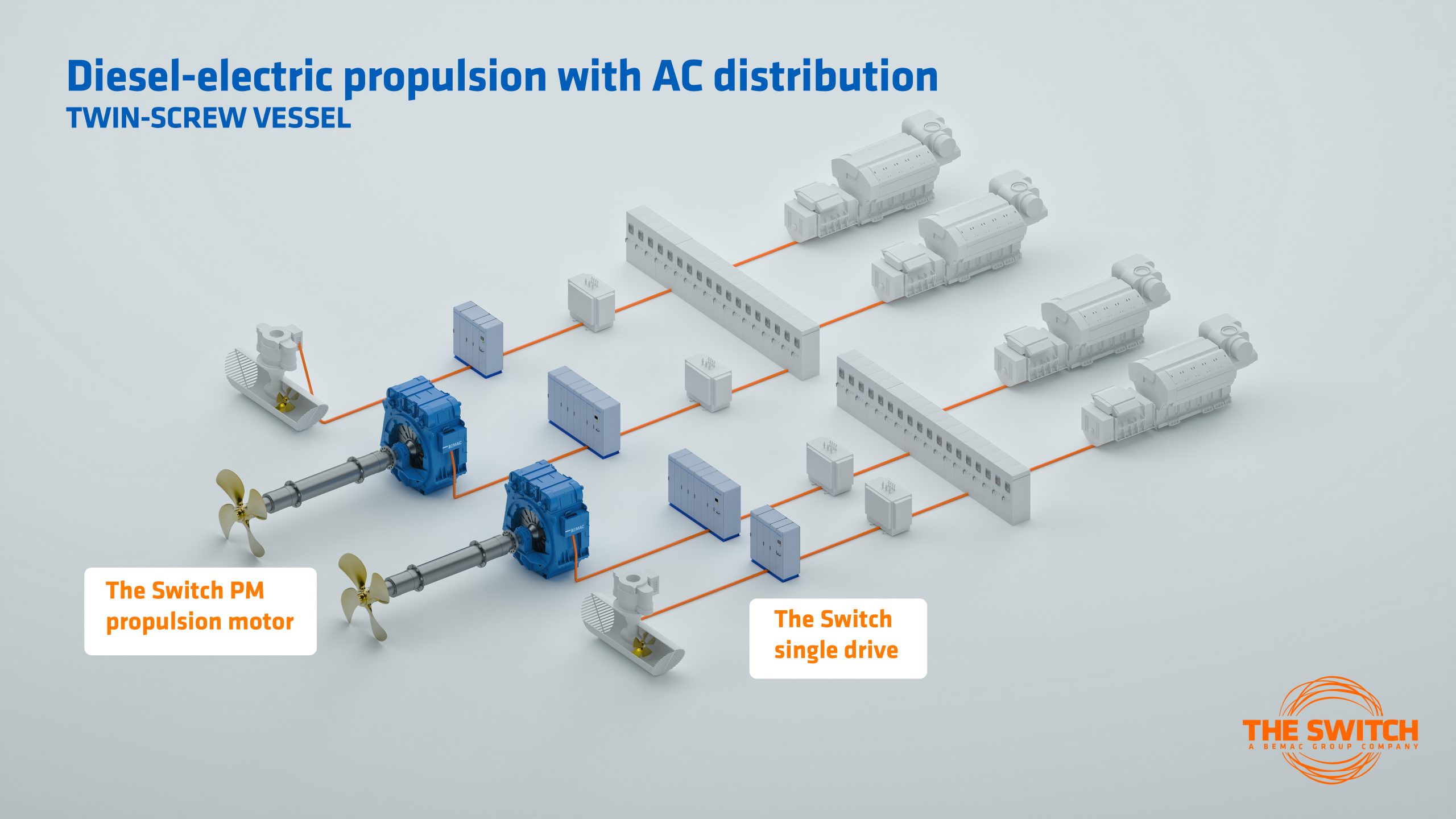
  • Hero-style diagram of diesel-electric propulsion with AC distribution for a twin-screw vessel, showing engines, switchgear, and propeller shafts.
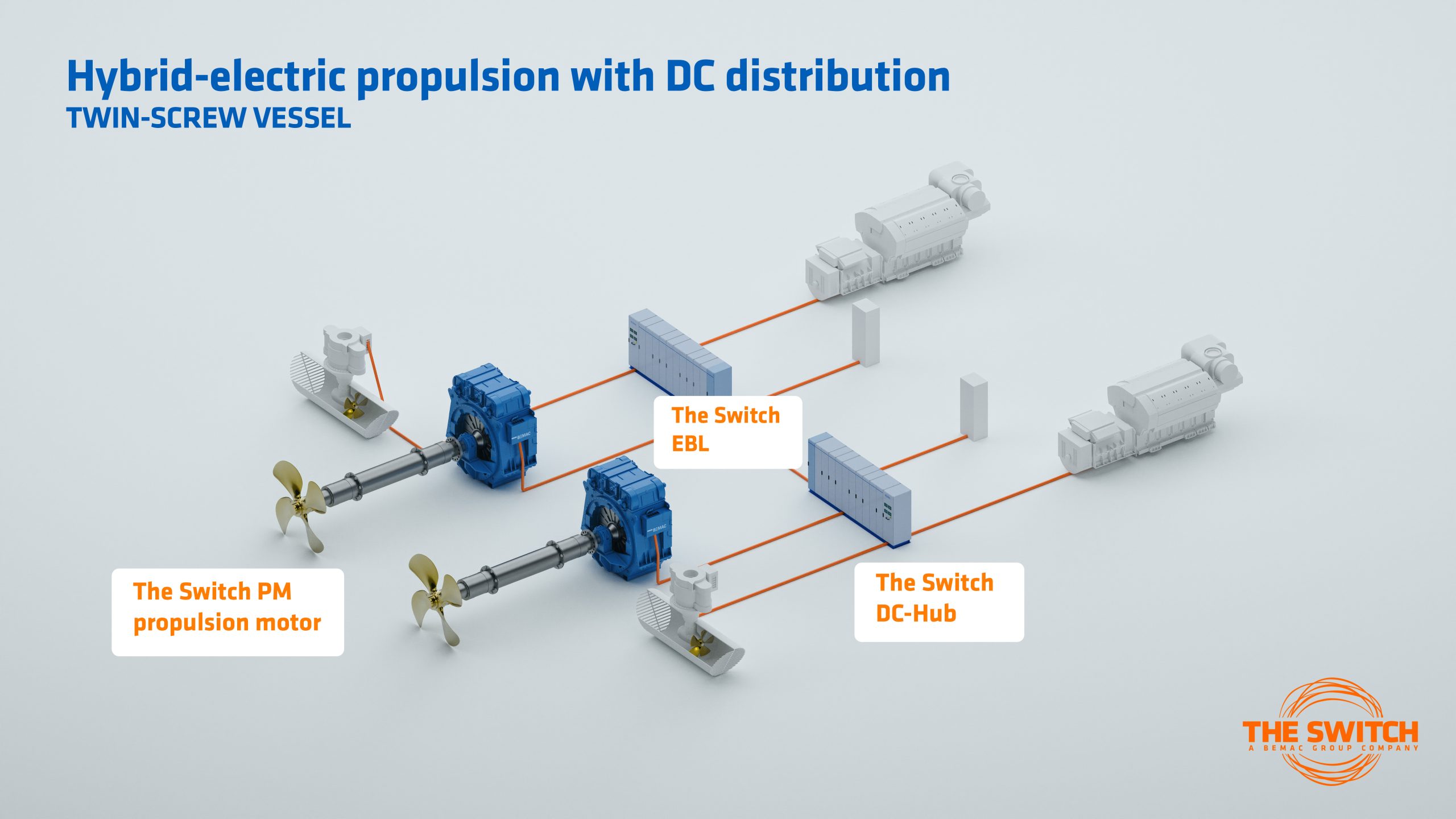
  • Diagram of a hybrid-electric propulsion system with DC power distribution showing switch blocks and multiple propulsion modules connected by orange power lines.
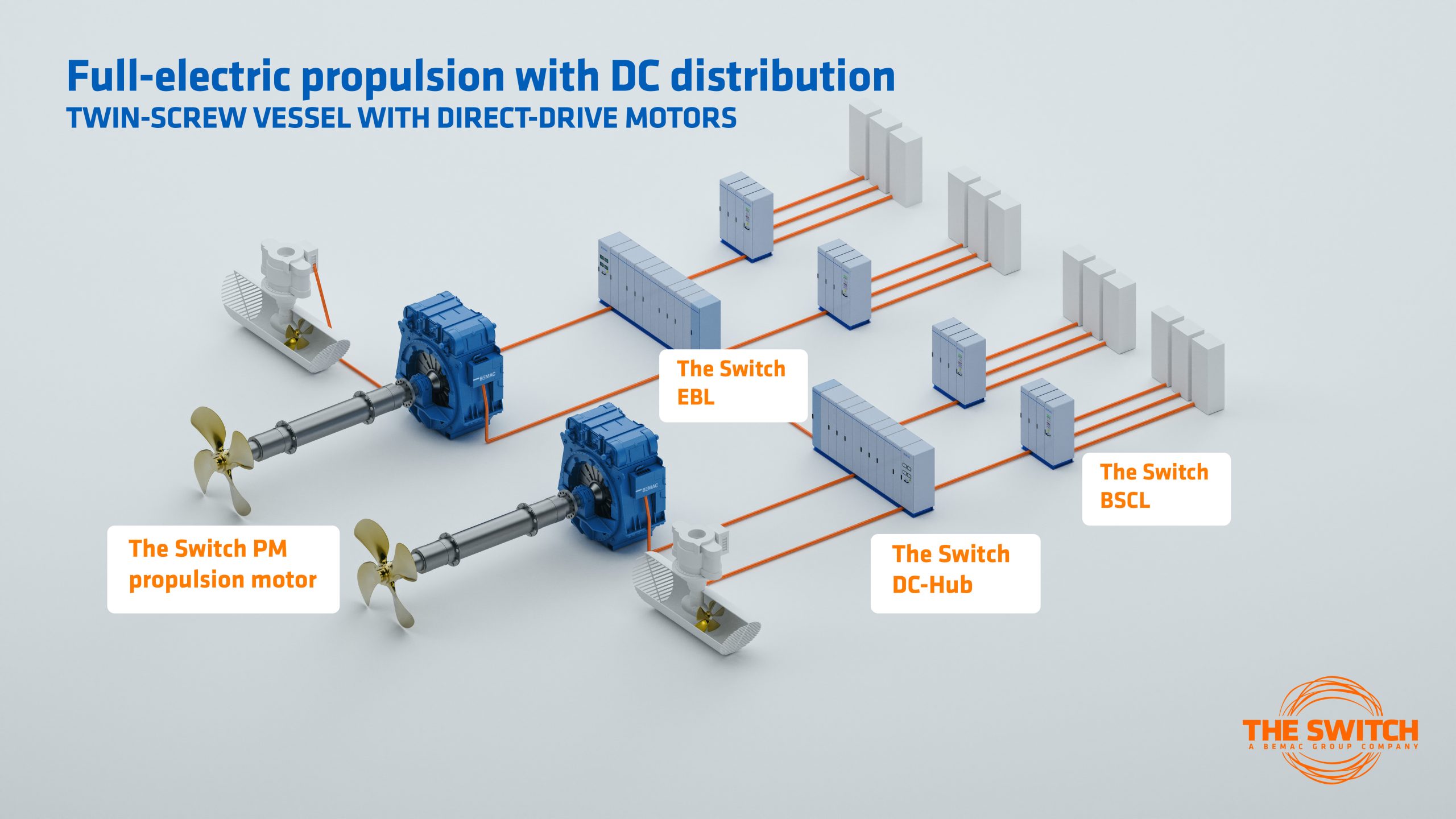
  • Isometric diagram of a full-electric propulsion system with DC distribution, showing propulsion motors, switchgear, and labeled components like The Switch DM/PM/EBL/BSCL and DC-Hub to a rack of cabinets.