For dry-bulk owners in the 28,000-dwt to 67,000-dwt segment, electrification can deliver practical efficiency gains now while making it easier to integrate new energy sources later. Compact permanent magnet (PM) machines, modern drives and flexible DC distribution provide the building blocks.
A Handysize, Supramax or Ultramax bulker ordered today could still be trading well into the 2040s. Owners therefore face two challenges at once: reducing fuel consumption and emissions with technology that pays its way today, while recognizing that the vessel may use a different mix of fuels, batteries or other energy sources later in its life.
That doesn’t mean trying to predict now what will power the ship in 15 years. Nor does it mean turning a smaller bulker into a fully electric vessel. The opportunity is to electrify more of the power architecture: improving how electricity is generated and used today while making it easier to integrate batteries, power take-in (PTI) operation or alternative fuels in the future.
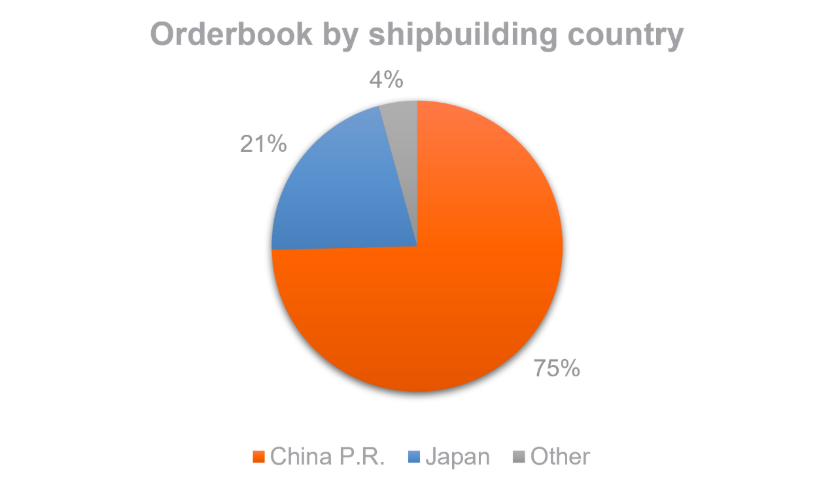
Japan shows why this segment deserves attention. Handysize, Supramax and Ultramax bulkers accounted for 61% of Japanese export newbuilding contracts in FY2025, up from 52% the year before, according to Japan Maritime Daily. The global orderbook also points to continued demand for this segment, with China and Japan accounting for a significant share of vessels scheduled for delivery through 2030.
For shipowners, the initial purchase price is only part of the investment equation. Fuel performance, reliability, charter earnings and residual value all influence a vessel’s economics over its lifetime. Electrification has to pass much the same test.
Reflecting this trend, The Switch is seeing rising demand in Japan for its lower-power PM machines. Smaller bulkers typically require less electrical power than the largest deep-sea vessels, while tighter machinery spaces and a focus on lifecycle efficiency favor compact, high-efficiency equipment.
Efficiency across the operating profile
Bulk carriers don’t operate at one speed and one load. Conditions vary between laden and ballast voyages, while vessel speed, weather and onboard electrical demand change continuously.
PM machines maintain high efficiency across a broad operating range. Compared with an induction machine, the advantage is typically around 3–8 percentage points, depending on load and machine design, and can reach 10 percentage points at part load.
Used as a shaft generator, a PM machine produces electrical power from the main engine, reducing the need to run auxiliary gensets. Depending on the vessel’s trading pattern and electrical load, this can eliminate several thousand auxiliary-engine running hours a year.
A 2025 Energies study modeling a 200 m bulk carrier found that replacing auxiliary diesel-generator output with shaft-generated power could save around 75–150 tonnes of fuel annually, depending on electrical load.
The shaft generator must also operate efficiently as vessel speed changes. As the main engine’s rotational speed changes, so do the shaft generator’s speed and the frequency of the electricity it produces. A drive converts this variable-frequency output to the constant frequency required by a conventional AC grid. This allows the shaft generator to supply electricity across a much wider speed range rather than being limited to a single shaft speed.
For smaller bulkers, however, achieving these efficiency gains is only part of the challenge. The equipment also has to fit within a more constrained machinery space.
Designing for a smaller engine room
Although smaller bulkers generally have lower power requirements, their narrower hulls and tightly packed engine rooms make equipment footprint, weight, cooling and integration all the more important.
This is one reason The Switch extended its PM range into lower power classes. The PMM850M is designed for applications of around 500 kW to 1.5 MW, bringing PM efficiency in a more compact package to vessels where both power requirements and installation space are lower.
For shaft-generator applications, the machine can be integrated directly into the propulsion shaft line and operates across a continuous speed range of 0–400 rpm. Its integrated water-jacket cooling connects directly to the vessel’s freshwater cooling system, replacing the separate air-to-water cooling unit, fans and heat exchanger used on larger PM machines and further reducing installation footprint.
Making the machine compact enough for a smaller engine room solves the physical integration challenge. The next question is how that machine fits into the vessel’s wider electrical system – and how easily that system can accommodate other energy sources and loads in the future.
Think system, not components
A PM shaft generator can work within a conventional AC architecture. But owners looking to take electrification further can also opt for full DC distribution.
The Switch DC-Hub creates a common DC backbone that connects the shaft generator, batteries, propulsion and other electrical sources and loads through power converters. This reduces the number of AC/DC conversion stages and makes it easier to add new sources or consumers later.
Drives control the connected motors and generators efficiently across changing speeds and loads.
Together, PM machines, DC distribution and drives allow the electrical system to be considered as a whole: how power is generated, converted, distributed and consumed across the vessel.
That architecture also provides more flexibility as the vessel’s needs evolve.
A ship may rely mainly on a conventional main engine today, but later add batteries, fuel cells, shore power or generators using a different fuel. With the right electrical architecture already in place, changing the energy source does not necessarily mean rebuilding the entire power system around it.
Build in flexibility
Nobody ordering a bulk carrier today can know which fuels or energy carriers will make the most sense 10 or 15 years from now. But the electrical system can be designed so that changing the source of energy later does not mean starting from scratch.
For a smaller bulker, the practical first step may simply be an efficient PM shaft generator and drive that reduce auxiliary-engine use and fuel consumption from day one. Where greater flexibility is required, DC distribution can provide the backbone for integrating batteries, PTI operation, fuel cells or other power sources as the vessel evolves.
This makes electrification a staged investment rather than a bet on one future propulsion solution. Each step has to justify itself through efficiency and operating savings today, while making the next step easier if and when the business case develops.
For smaller vessels expected to trade for 20 years or more, the combination of immediate efficiency gains and longer-term flexibility is key – and where The Switch’s PM machines, drives and DC distribution can offer an especially good fit.

Director, Corporate Strategy
Yusuke Ota

Yusuke Ota is Director of Corporate Strategy and Board Member of The Switch and a Corporate Officer at BEMAC. He has extensive experience in corporate strategy, M&A, business transformation, finance and international management, with a background in management consulting and the automotive industry.
Subscribe to our monthly marine blog
We are dedicated to bringing you valuable and informative marine content every month. Get the latest trends and insights from across the marine industry. Subscribe to The Switch monthly marine blog to receive monthly updates about the latest marine industry trends and technology news.