Silent, zero-emission power for passengers at sea
Passenger vessels are setting the pace for marine electrification, driven by growing demand for greater energy efficiency, lower emissions and quieter operation. As operators integrate batteries and alternative fuels, they need reliable power electronics and electric machines that fit within highly compact passenger vessel designs.
The Switch’s proven power electronics and electric machines enable partially or fully electric vessel operation with maximum uptime. The result is quieter and more sustainable voyages, with the flexibility to integrate future energy sources. It’s a portfolio built for efficiency at sea – and comfort on board.
In some cases, a fully electric ferry installation can be lighter than a diesel-mechanical one – eliminating the need for large main engines and fuel tanks.
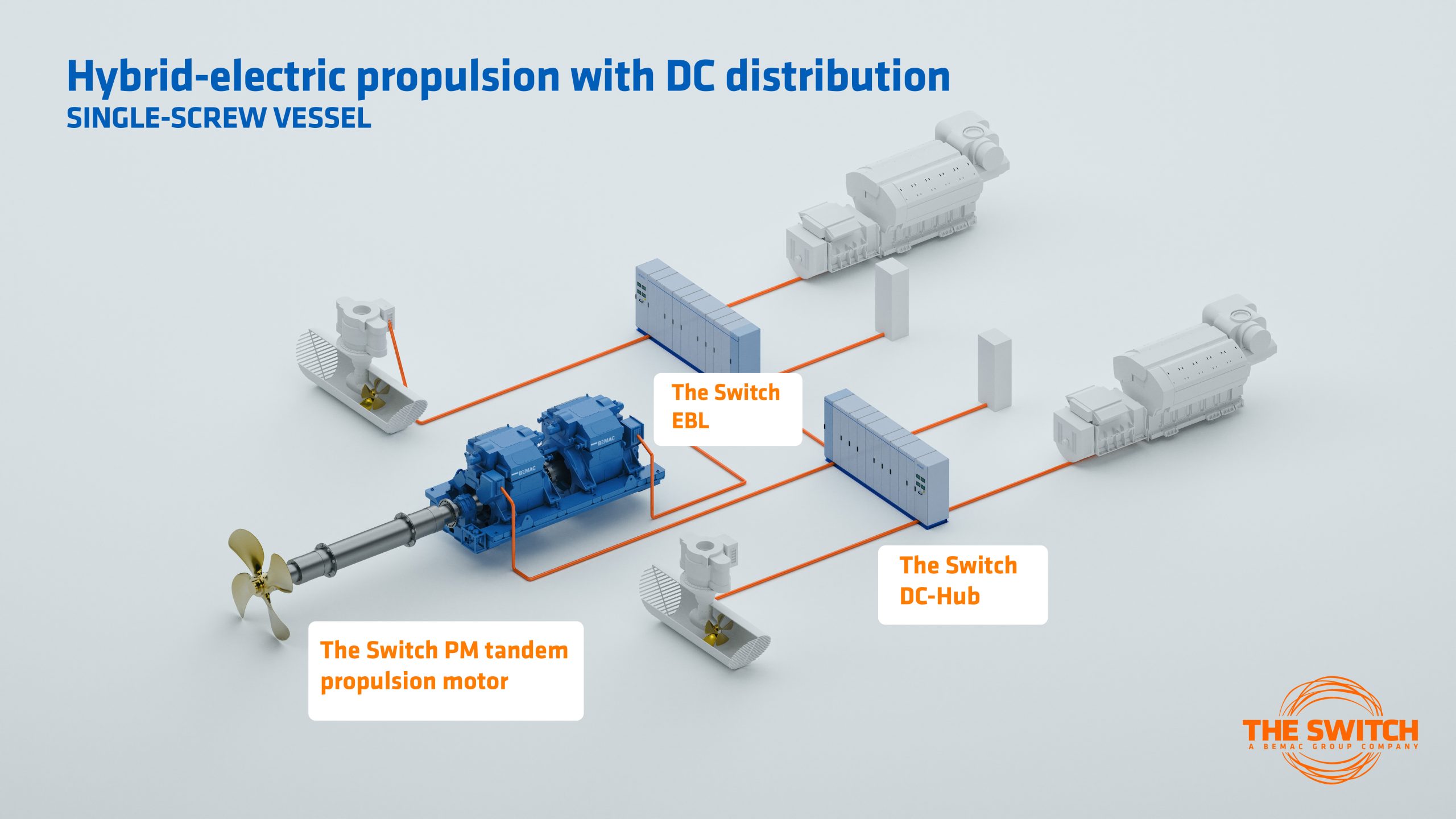
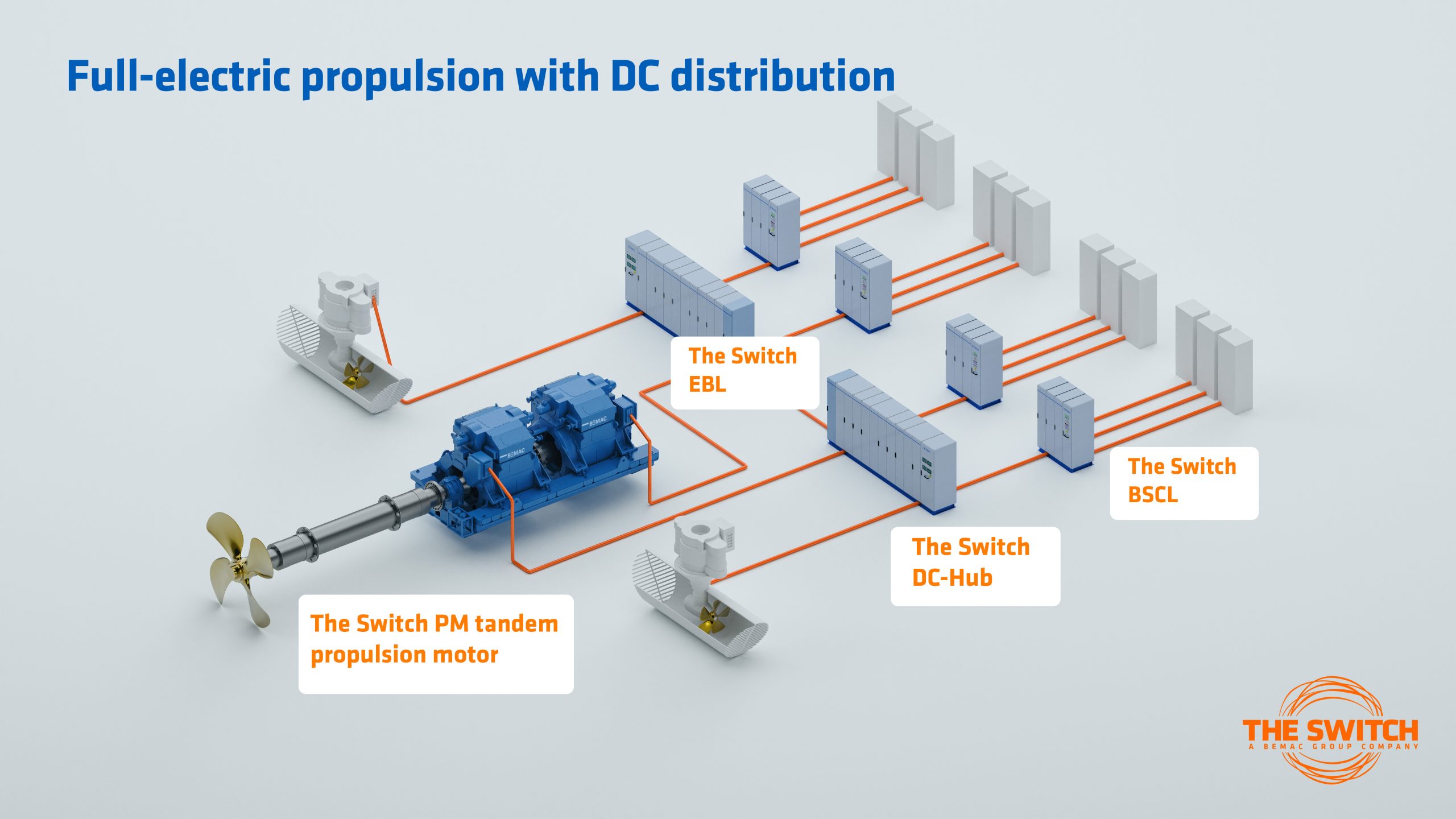
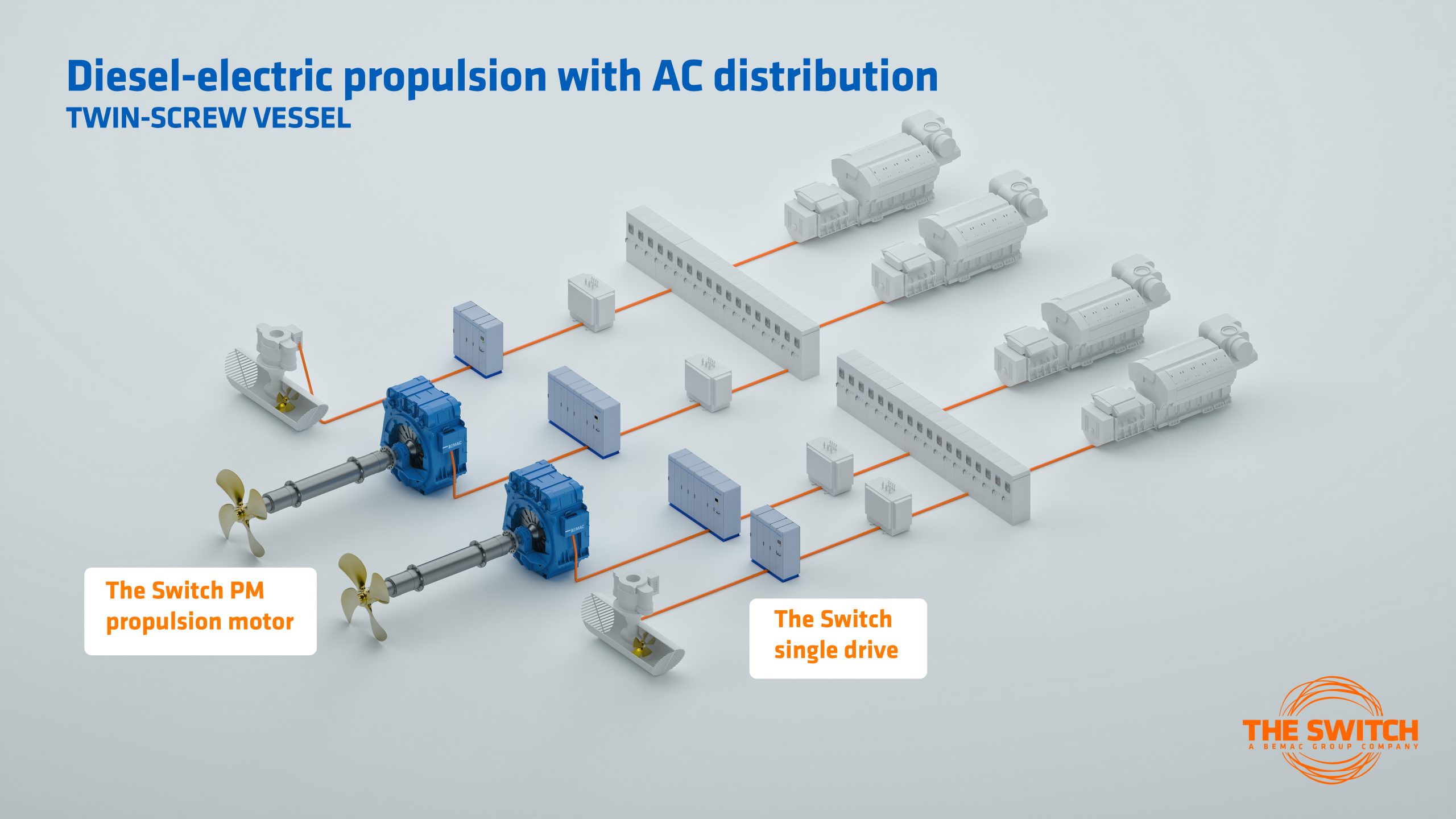
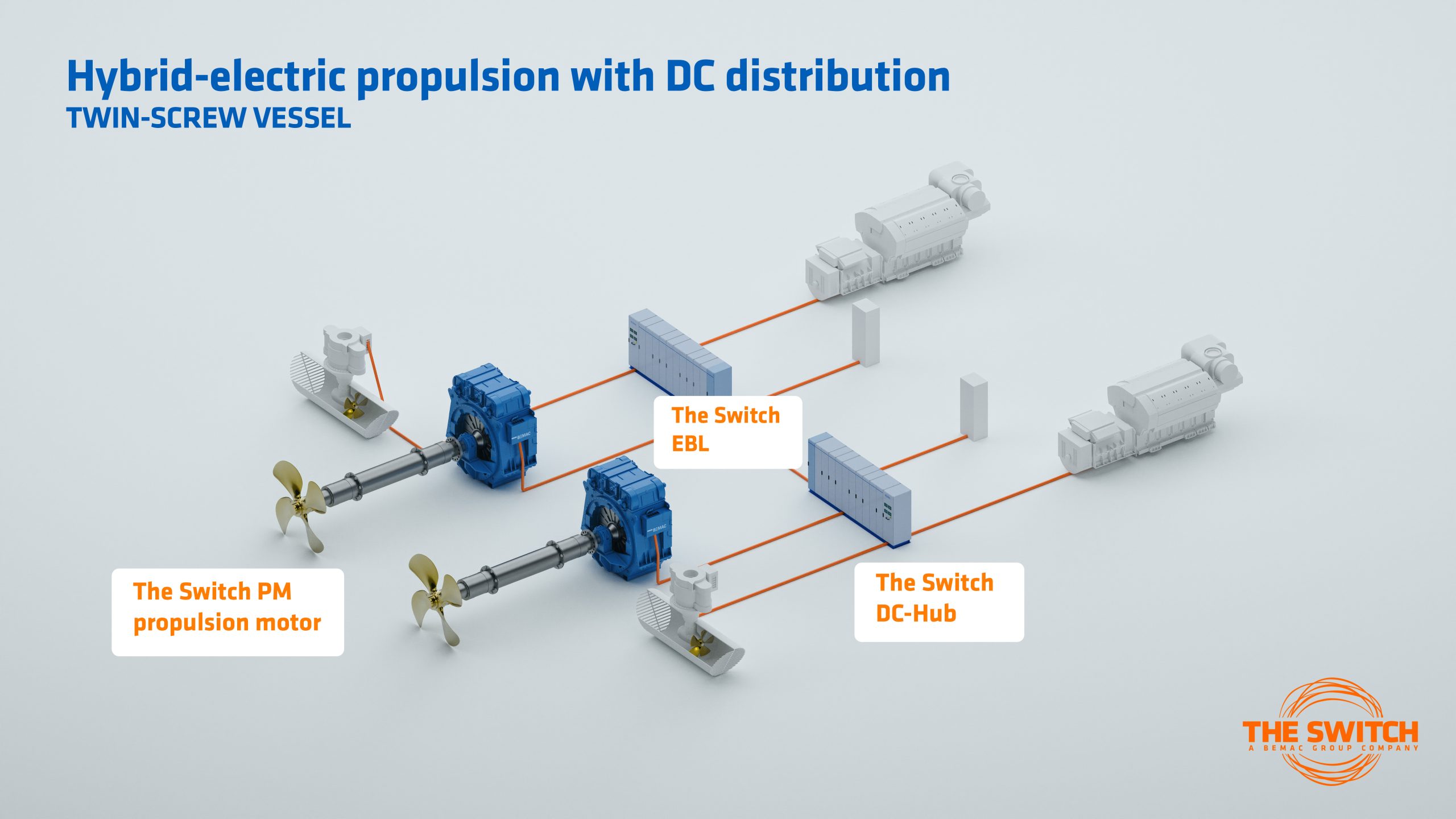
Marine solution concepts
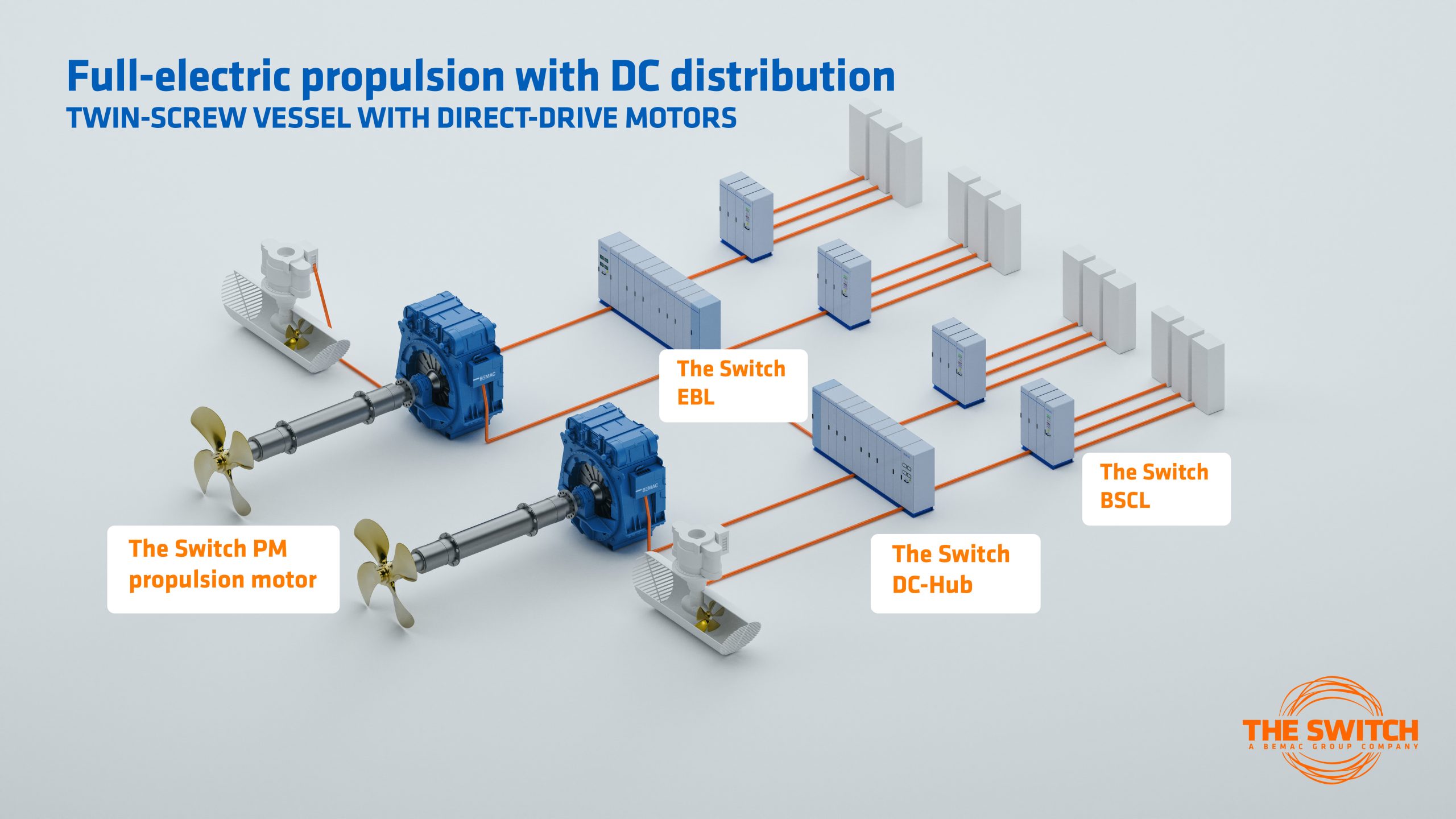
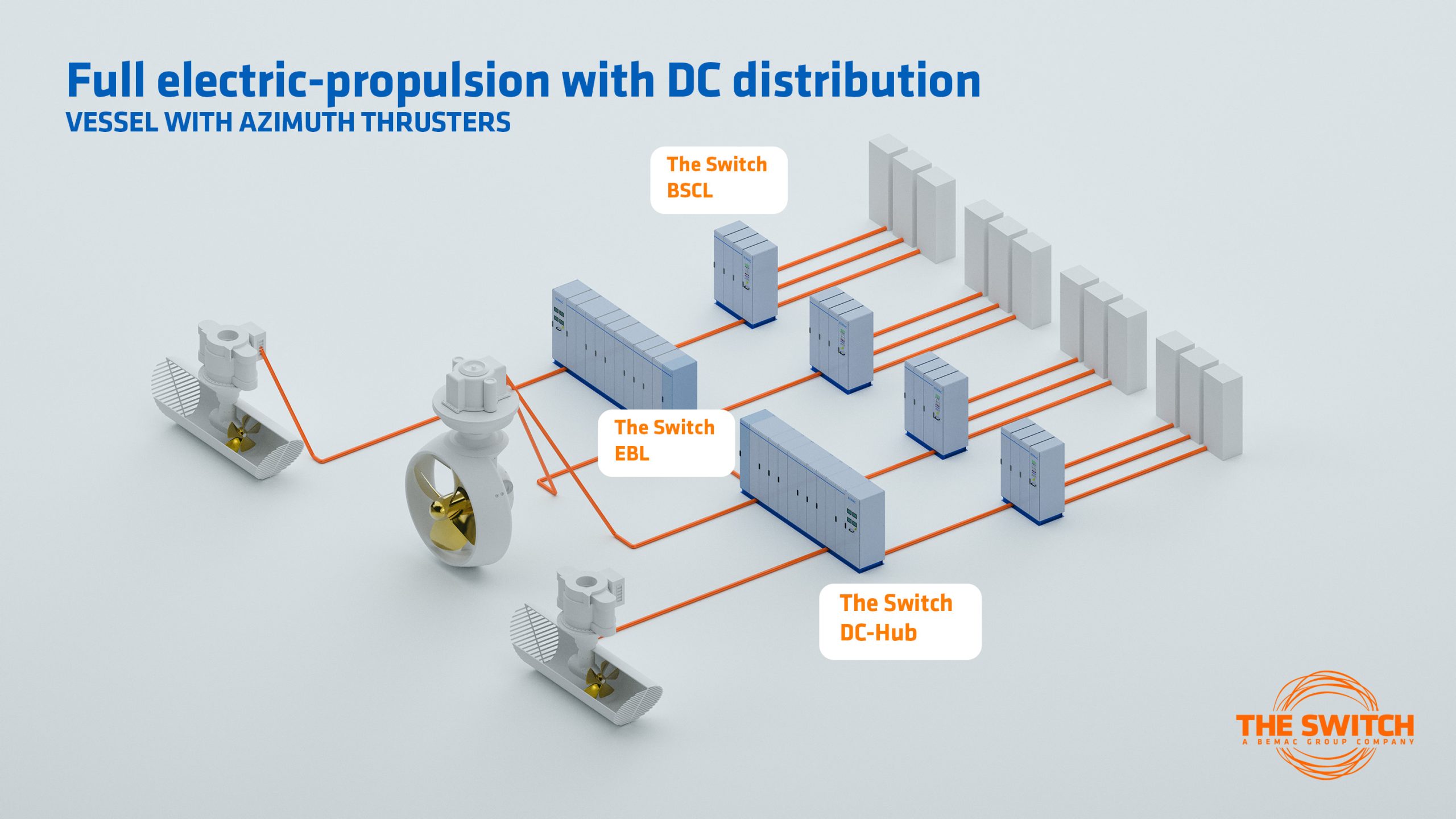
References
Buquebus Ferry Operator, Argentina
Background
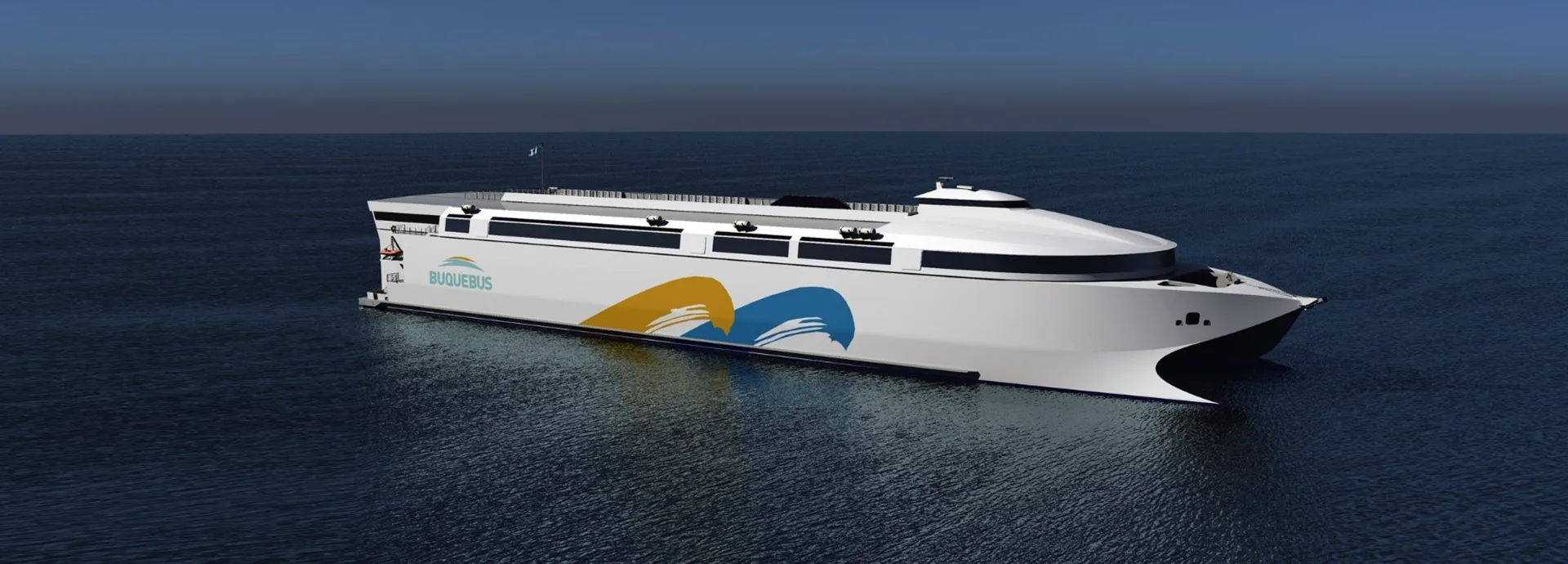
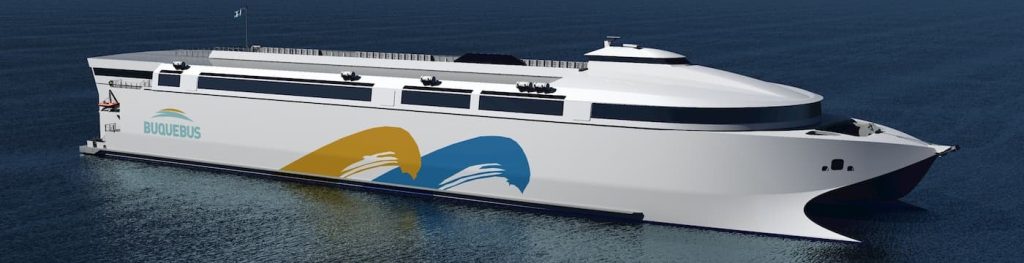
The world’s largest fully electric RoPax ferry was built by Incat for operation between Argentina and Uruguay. The 130-meter vessel can carry 2,100 passengers and 226 cars and was delivered in 2025.
Solution
The Switch supplied DC-Hubs for main power distribution, protection devices for the vessel’s large battery system, and power electronics for shore charging. The vessel utilizes more than 40 MWh of Corvus Energy Dolphin NxtGen battery storage.
Results
The DC-Hub serves as the vessel’s main DC switchboard, connecting battery power to propulsion and other onboard consumers. The protection devices enable safe and cost-efficient integration of the battery system, while the shore charging solution supports reliable and efficient electric operation.
Louis Dreyfus Armateurs (LDA), France
Background
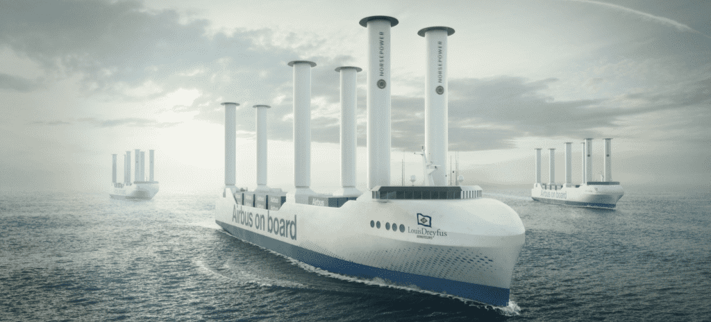
Louis Dreyfus Armateurs (LDA) has commissioned a series of innovative 8,500 dwt hybrid Ro-Ro vessels designed to transport Airbus A320 subassemblies between France and Alabama, USA. The vessels have been developed by Deltamarin with a strong focus on reducing fuel consumption and emissions in transatlantic operations.
Solution
The vessels combine Berg Propulsion’s Electrical System Integration (ESI) with Norsepower Rotor Sail technology to maximize energy efficiency and reduce environmental impact. The hybrid system supports low-emission harbor operations and cargo handling through Power Take Out (PTO) and Power Take In (PTI) modes, while the Take Me Home functionality enables fully electric operation when required.
Results
The compact hybrid solution delivers significant environmental and operational benefits, including fuel savings and CO₂ emission reductions of up to 50%. The vessel design supports LDA’s ambitious sustainability targets and demonstrates how advanced hybrid technologies can improve the efficiency of long-distance cargo transportation. Following the successful concept phase, three vessels have been ordered.