Large fully electric ferries are no longer a concept – they are already operating in real-world conditions. The real question is how to make them comparably efficient, safe and reliable.
The pace at which electric ferries are moving from niche to scale is remarkable. The market is already worth several billion dollars and is expected to grow at double-digit rates through the 2030s.
Global pressure to decarbonize shipping is the main driver. Already today, some ports require zero-emission operation when vessels enter, and similar requirements are expected to become only more widespread.
In addition, many operators deliberately want to position themselves as environmentally responsible, especially as passenger preference for sustainable travel continues to grow.
Technology enabling scale
Rapid advances in battery technology are well supporting this shift. Lithium-ion batteries, for example, have seen a roughly 40% increase in energy density over the past five years. At the same time, battery size and weight continue to decrease, charging efficiency is improving and costs are declining year by year. Together, these developments are significantly lowering the barriers to large-scale electrification.
However, scaling from small hybrid vessels to large, fully electric ferries is not just a matter of batteries. It calls for a fundamentally different approach to system design.
High power demand, peak loads and fast acceleration requirements place significant stress on the electrical system. In parallel, operators expect it to be efficient, reliable, compact and flexible.
This is where power system architecture becomes a defining factor.
Why DC distribution is the preferred choice
For vessels with large battery systems, DC distribution is widely considered the most logical architecture.
Batteries are inherently DC, and most modern onboard loads – including drives, converters and electronic systems – internally operate on DC.
DC systems enable:
- Higher overall efficiency by minimizing conversion losses
- Compact system design with reduced footprint
- Improved redundancy and system stability
- Seamless integration of energy storage and alternative energy sources
In contrast, AC-based architectures introduce additional conversion steps, increasing losses and requiring larger battery capacity to compensate. At multi-MW scale, losses become significant. This leads directly to increased weight, volume and system complexity.
In large electric ferries, optimization is everything – and DC distribution is the answer.
The safety challenge of high-energy systems
The real challenge lies in how to manage electrical energy safely.
In DC networks, fault currents rise rapidly and do not naturally drop to zero.
As vessel size and battery capacity increase, so does the amount of energy on board. With this, the risk of electrical faults becomes more pronounced, with consequences ranging from equipment damage and operational disruptions to, in extreme cases, fire.
Effective protection is therefore critical.
Protection devices must respond instantly and selectively – isolating faults without affecting overall system operation. Achieving this requires a carefully defined protection philosophy, enabled by advanced power electronics.
Ultrafast protection in practice: China Zorrilla
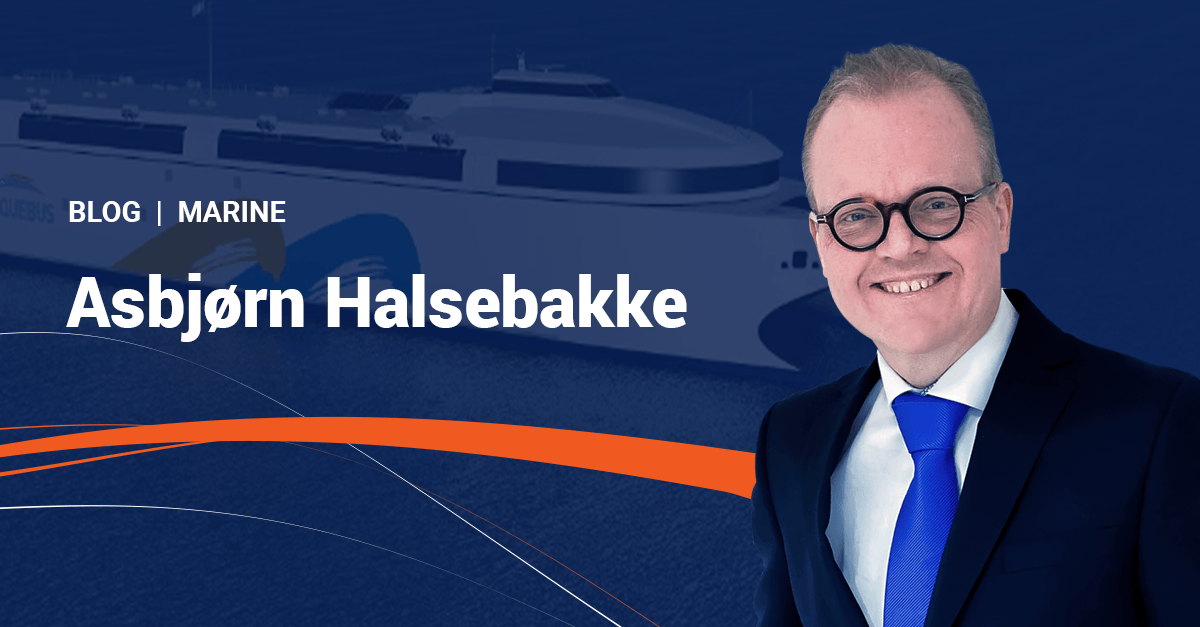
A clear example of this approach in action is the world’s largest fully electric ferry, China Zorrilla, built by Incat for Buquebus.
The 130-meter RoPax vessel carries over 2,000 passengers and more than 220 vehicles, powered by a battery system exceeding 40 MWh – the largest ever installed on a ship. Critically, vessel performance is not sacrificed. The ferry can achieve speeds of around 25 knots – comparable to conventional fast ferries. And overall vessel weight is slightly lighter with batteries than what it would have been with LNG engines and LNG tanks.
At this scale, ensuring safety and system reliability becomes significantly more demanding. Any fault must be isolated immediately to prevent propagation.
To achieve this, the vessel was equipped with The Switch DC-Hub power distribution platform together with three ultrafast protection devices:
- Electronic Current Limiters (ECLs)
- Battery Short-Circuit Limiters (BSCLs)
- Electronic DC Breakers (EDCBs)
The full protection device suite also includes The Switch Electronic Bus Links (EBLs).
These purpose-built power electronic devices isolate faults within microseconds, prevent cascading failures and enable ride-through capability – allowing the vessel to continue operating even if a fault occurs in one part of the system.
With this solution, China Zorrilla proves that scale, performance and safety can go hand in hand.
A flagship for what comes next
Projects like China Zorrilla once again confirm that large-scale electric ferries are no longer theoretical. The technology is very much there.
What is required is the right combination of system integrators and technology partners – and forward-thinking operators willing to embrace the transition.
Looking ahead, solutions of a similar scale could easily extend to container vessels, offshore construction ships and retrofit projects for comparable ferry types. As battery technology continues to improve and power electronics evolves further, the shift toward large fully electric vessels will only accelerate.
And that is ultimately what matters most – enabling a cleaner, more efficient maritime industry for future generations.

Chief Expert, Marine Concepts
Asbjørn Halsebakke

Asbjørn Halsebakke is leading his team in engineering marine drive solutions, frequency converters and rotating machinery, which are in use today with the utmost reliability on vessels throughout the world. Before joining The Switch, Halsebakke worked for Aker Kværner Elektro AS in Norway to develop frequency drives and perform sea trials and commissioning. Halsebakke graduated from Narvik University College with a Master of Science in Electrical Engineering. He also attended the University of Bergen, where he studied elementary physics and mathematics.