Shipowners are being asked to commit to fuel strategies, regulations and operating profiles that remain uncertain. True future-proofing isn’t only about choosing the “right” energy source but about designing power systems that can absorb change, contain faults and remain operable as complexity increases.
For today’s shipowners, “future-proofing” has become one of the most overused – and least precise – terms in the industry. It’s usually framed as a question of fuel: methanol or ammonia, batteries or biofuels, hybrids now or something else later. Each option comes with regulatory, commercial and technical uncertainty, and owners are being asked to make long-term decisions without knowing which assumptions will hold.
But there’s a quieter risk embedded in that framing.
It assumes the main challenge is choosing the right energy source. In reality, the greater challenge is ensuring the vessel’s power system can absorb change without needing to be rebuilt every time assumptions shift.
From prediction to resilience
Fuel strategies are, by nature, predictive. They require owners to anticipate future regulations, fuel availability, operating profiles and port infrastructure. History suggests those predictions rarely play out exactly as planned.
A more resilient approach is to focus on what doesn’t change: the need for safe, predictable power under all operating conditions – including abnormal ones. From that perspective, future-proofing is less about betting on a fuel and more about designing a power system that can tolerate uncertainty.
That means asking different questions. Not “which fuel will we use?” but “How will the system behave if we add, remove or change energy sources?” Not “Can it operate efficiently today?” but “Can it survive faults, upgrades and partial transitions tomorrow?”
Fault tolerance across unknown energy sources
As vessels integrate batteries, fuel cells and other emerging technologies alongside conventional generation, fault dynamics become more complex. Different energy sources behave differently under abnormal conditions, particularly in DC systems where fault currents rise extremely fast.
A future-ready power system must be able to contain faults regardless of where they originate. Whether the source is a battery, a fuel cell or a generator, the surrounding system should remain stable, preserving voltage and keeping healthy consumers running. This is why protection philosophy matters as much as energy choice. Systems designed to isolate faults selectively and at microsecond timescales are inherently more tolerant of change.
This is why protection philosophy matters as much as energy choice. Systems designed to isolate faults selectively and at microsecond timescales are inherently more tolerant of change. They don’t depend on knowing in advance exactly which energy source will dominate – they’re built to handle variation.
Adaptability under partial upgrades
Few vessels will transition from one energy model to another in a single step. More likely, upgrades will be incremental: a battery added here, a new consumer there, an additional energy source later in the vessel’s life.
Future-proofing in this context means avoiding architectures that require wholesale redesign every time the system evolves. Power systems built around scalable DC hubs and fast, dedicated and selective protection can often be extended without disrupting what’s already in place. New sources can be connected, new loads added and operating modes adjusted without compromising stability.
By contrast, systems that rely heavily on fixed layouts, slow protection or rigid separation often become brittle. Each change introduces new interfaces, new workarounds and new risk.
Survivability as complexity increases
As systems grow more complex, the likelihood of faults increases – not because equipment is unreliable but because interactions multiply. A future-proof system is one that fails in a controlled way as complexity rises.
That means faults remain local events rather than cascading failures. It means the vessel can ride through abnormal conditions long enough to exit operations safely. And it means operators and owners can trust that change won’t introduce disproportionate risk.
Rethinking what “future-ready” really means
None of this diminishes the importance of fuel choice. Energy strategy matters, and regulatory pressure will continue to shape decisions. But fuel alone doesn’t make a vessel future-proof.
True future-proofing lies in designing power systems that are tolerant of uncertainty: systems that can accept new energy sources, operate safely during partial transitions and remain predictable as complexity increases.
For shipowners navigating an uncertain decade ahead, this shift in perspective is often more practical than trying to predict the future. Rather than betting on a single outcome, it focuses on resilience – on ensuring the vessel can survive change, whatever form it takes.
Product Line Director, Power Electronics
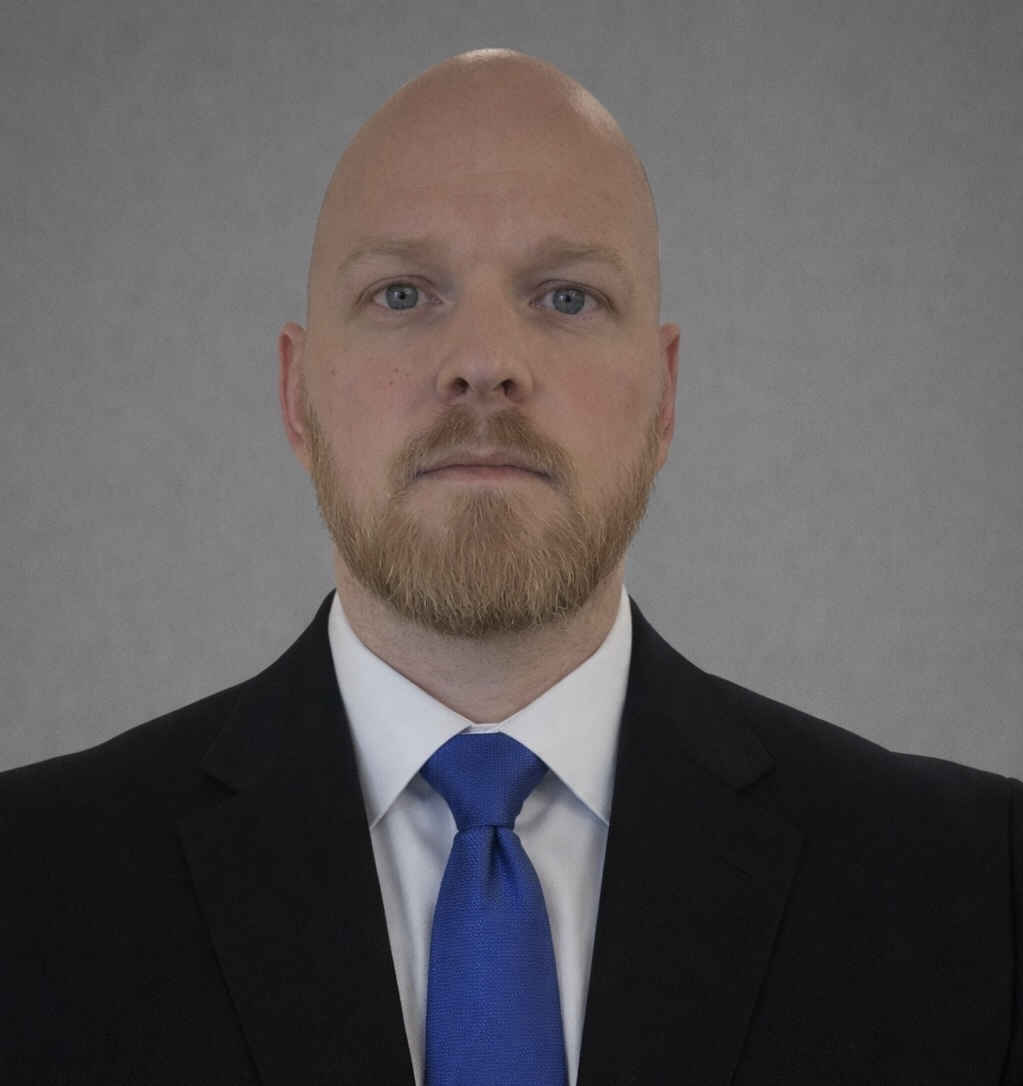
Paul Atherton

Paul Atherton is General Manager of The Switch Marine Drives Norway and Product Line Director for Power Electronics. He has over 15 years of experience in the marine industry, focusing on power electronics, product development, operations, and business development. He holds a Bachelor of Engineering in Electronics from Bergen University College.
Subscribe to our monthly marine blog
We are dedicated to bringing you valuable and informative marine content every month. Get the latest trends and insights from across the marine industry. Subscribe to The Switch monthly marine blog to receive monthly updates about the latest marine industry trends and technology news.